Description

This blog contains book reviews, comments on interesting things and a smattering of self promotion. Enjoy.


Showing posts with label books. Show all posts

Saturday, 30 December 2017

Re-reading 'The Lord of the Rings'

If you were a nerdy kid, you know The Lord of the Rings. Even if you haven’t read the books or seen the films, the characters and the most basic elements of the plot have entered our common consciousness. After being swept up in the excitement of Peter Jackson’s films, I read the books when I was around fifteen or sixteen, and I remembered them fondly, but I never returned to them – I read promiscuously, and three heavy volumes of ‘stuff I’d read before’ always felt like too much of a time investment. There are always more books to read and, increasingly, not enough time to read them. In the decade since I last read them, I have studied English Literature at A-level (initially just as a fun extra subject), developed a love for Literature with a capital ‘L’, become a not-very-good writer, completed a degree in English and Creative Writing, had a short but intense career teaching English, and become an older, wiser, hopefully slightly better writer.

It is in my role as an older, wiser, hopefully slightly better reader that I decided to return to The Lord of the Rings. In many ways it is the Ur-text of modern fantasy. Because of The Lord of the Rings, we know that if we choose an Elf in a video game, we will be a tall, somewhat aloof archer from an ancient, mystical culture, and not a midnight shoemaker or a pointy-hatted friend of Father Christmas. We now that if we open a fantasy novel, we are likely to find a world which very much resembles Europe in the Middle-Ages, but populated by wizards and dragons and filled with magical artefacts. We also know that it likely to have maps in the front page, and be part of a longer sequence. I’m not going to enter the debate about Epic Fantasy vs. Sword and Sorcery, or whether Tolkien’s pulp-magazine contemporaries have shaped the genre more than he has – these discussions are best left to people who know the genre much better than I do. Instead, I’d like to look at how The Lord of the Rings fits into the literary traditions that I do know about.

I’d like to start, as Tolkien does, in The Shire. The link above reveals that many dislike Hobbits for their tweeness, but the role they serve is clear. It is well established that The Shire represents an idealised version of England, and that the Hobbits, with their anachronistically domestic sensibilities, are audience stand-ins through whose nearly-modern eyes we first see the grandeur of Tolkien’s Middle Earth. But they also serve a more fundamental function in the story. More than Aragorn or Gandalf, Frodo is the protagonist of the novel – demonstrating how heroism and strength can be found in an age where such things seem to have been left in the ancient past. In this reading of the novel, the Scouring of The Shire, left out of Jackson’s adaptations, is a crucial final act, where the four hobbits, returned from their travels, are able to draw on their newfound strength to challenge the sort of fascist state that Tolkien has been accused of advocating. I wrote yesterday about how Orcs represent a love of war and destruction; it is perhaps the Hobbits, not the Elves from whom Tolkien’s mythos says they are distorted, who represent the Orcs’ true opposites. While the Orcs love only chaos, the Hobbits are lovers of comfort and community. The pastoral Shire, with its fields, gardens and hills, is both geographically and thematically a counterpoint to the barren, craggy wastes of Mordor, but the Scouring of the Shire also serves to show how easily such things can be lost. Yes, Sam manages to repair most of the damage (with his and Rosie’s baby symbolising a new beginning, as babies at the ends of novels often do), but the novel’s strongly anti-industrial tones, and the sense of a lost past which pervades so many other aspects of the novel, make The Shire into a very English elegy for an idyllic past to which we, like Frodo, can never return.

As I read the novel, I often found myself wondering how much Tolkien could be said to be writing in the Romantic tradition. His stated aim – to create an English mythology – parallels the early nineteenth-century interest in national epics, his wildernesses and mountains approach the sublime, and his sense of a lost mystical past would not seem out of place alongside Shelley’s ‘Ozymandias’ or Coleridge’s ‘Kublai Khan’. Tolkien borrows from Romanticism’s successors: the Gothic, in his description of Shelob’s lair, and the Pre-Raphaelites in his magical medievalism. These are the more recent filters through which his more obvious influences – his deep study of ancient Germanic stories – are brought to us.

Although his form – a novel made up of a multi-stranded narrative with several protagonists – is modern, Tolkien’s writing is rooted in heroic myths. His essay on ‘Beowulf’, ‘The Monster and the Critics’, gives some insight on how Tolkien saw the tradition from which he was writing. While Greek heroes often have a tragic flaw which brings about their undoing, Tolkien sees a more general sense of doom as being central to the Northern heroes who inspired his own writing. Doom is used to mean fate generally, rather than in the more negative modern sense, but even when that doom brings good things, ulitmately ‘all glory ends in night’. For the creator of heroic narratives, this means ensuring that the hero’s death is equal to his life. For Beowulf, Tolkien says, this death has to come at the hands of the dragon – a monster equal to those he slew at the dawn of his heroism. This model has a number of implications for The Lord of the Rings. The heroic characters all accept the possibility of their own deaths against impossible odds: Gandalf on the bridge of Khazad Dhûm, Theoden on the field outside Gondor, Aragorn and his host at the gates of Mordor, and Frodo on the slopes of Mount Doom – all are determined to continue fighting, even when their mission seems impossible to complete. This take on heroism might not stand out as particularly unusual in literature, but it is brought into sharper focus throughout by weaker characters who give up hope and either collude with the enemy directly or choose to stop resisting and passively accept Sauron’s victory.
Unlike the ‘Beowulf’ poet, Tolkien allows his heroes to grow old without it diminishing their glory. Aragorn need not die at the hands of a final dragon, but is allowed to live into the appendices before dying peacefully in his home; Frodo and Gandalf are allowed to sail west. In part, this may be a question of practicality – after the existential threat of Sauron is defeated, any foe of equal power would necessarily undermine the entire novel, but it also reflects a change in taste in the millennium between ‘Beowulf’ and The Lord of the Rings. We now prefer peace to war, and when Aragorn dies of old age, when Frodo and Gandalf leave the world, it is both a testament to the peace they have forged, and a reward for their efforts in creating it.

This sense of a slow fading is presented in a less positive light in other elements of the novel. The Elves sail for the west, knowing they can no longer live in Middle Earth. Naturally immortal, they had already seemed mythical to people like Sam, whose day to day lives are far removed from them. We see this loss from the point of view of those left behind with the sense that some fundamental wonder has been taken from the world. If Middle Earth is supposed to be our world, this represents an early stage in the gradual stripping away of the world’s natural wonders and mysteries, culminating in the post-industrial, post-war age from where Tolkien is writing. He may be deeply mournful of this loss, but he must also understand his own conviction – that all things, no matter how wonderful, must one day end. When applied to mortal lives, Tolkien shows how the ring bearers begin to feel ‘stretched’, with the risk of finding themselves in Gollum’s pitiful state of existence.
Structurally, Tolkien has often been accused of unnecessary length. We who spend our lives thinking about stories, whether they be Greek Tragedies or Hollywood blockbusters, often praise ‘tightness’ of plot. We like to feel as though all the elements fit together like a jigsaw. This is a quality which seems of little interest to Tolkien, or many of the fantasy authors who have followed in his footsteps. However, the length of the story, its frequent digressions, are usually seen as being crucial to what has come to be known as ‘word building’. At first glance, this seems self-evident: more words, more story, must mean more space to create the world. I do not think this entirely true. By way of contrast, I’d like to offer the example of Mad Max: Fury Road, which I watched recently. It is not entirely fair to compare a visual medium with a written one, and the stories are very different, but the film does demonstrate how audiences are able to accept and understand the complexity of a world that is put in front of them with sparse dialogue and very little need to explain it. This does not mean that Tolkien is wrong to write at such length – he is not merely explaining his world. To return to the ‘The Monster and the Critics’, he is creating a ‘many storied antiquity’, a larger web of narratives to which The Lord of the Rings is merely a part. Tolkien is using myth as his model, and real myths constantly refer to each other – each character, each location, has the potential to stretch off into myriad other stories. All that walking also serves a purpose – you always know exactly where you are in the world and how it relates to other places. Tolkien’s myth is ‘present[ed] incarnate in [a] world of history and geography.’ In fact, the weirder diversions (Tom Bombadil, for example), are some of the most interesting, and are where Tolkien most approaches the unplanned strangeness of real myth. That is not to say that there is no sense of structure in the novel – eventually a sense emerges that all paths, no matter how meandering, lead inevitably to the plains between Gondor and Mordor. This includes the paths of the Fellowship, but also those of the armies on both sides whose journeys we only see at their ends. The resulting siege successfully conveys the tension of war, the shifts between waiting and acting. It is here where the structural differences between Tolkien’s novel and Jackson’s adaptation are most pronounced – Jackson cuts between narratives to show how they connect to each other – a very cinematic way to build suspense. Tolkien divides his narratives in two so that the reader, like the characters, are unaware of what is happening to the other part of the fellowship, and underlining their bravery in the face of perceived hopelessness. Both artists make the right choice for the format they are working in.


And now I have meandered for long enough. Rereading is important; age and experience bring new life into old books. I’m sure there is plenty more to say about The Lord of the Rings. Perhaps in another ten years, I’ll let you know.

Friday, 29 December 2017

Some thoughts on race and politics in The Lord of the Rings

Recently, I re-read The Lord of the Rings. Tomorrow I will publish a fairly in-depth exploration of what I found there, but first I’d like to address the charges that Tolkien was a fascist (this link is mostly about Michael Moorcock – you’ll have to scroll down for the relevant part), and that the Lord of the Rings contains elements that are racist. Although the two suggestions could easily be conflated, I find it easier to address them separately.

I do not think Tolkien was a fascist, but he (or at least his work) is deeply conservative. The idea of a nobility that is naturally suited to rule permeates the novel, but Tolkien is highly critical of those who misuse their power. The closest we get to a description of a fascist society is in the Scouring of the Shire, where a military police force brutalises the countryside, reduces the population to a barely subsisting serfdom, and any dissenting voice is locked up without trial or hope of release. This section of the books can feel like an afterthought when compared to the grand scale of the main narrative, but in its description of how ordinary hobbits get drawn into working as Saruman’s sheriffs (some because of ‘badness’, but some out of a desire for status and some just for the offer of steady employment) is perhaps Tolkien’s most nuanced look at power and its misuses, and one of the few clear links between the plot of the novel and the geo-political context of its writing (after the Second World War, during the Cold War). In contrast, the ‘good’ characters are noted for their mercy, and Aragorn – the novel’s archetypical king – shows, through his reluctance to enter Minas Tirith before being invited by the stewards of the city, and through his refusal to force unwilling men to follow him to a last stand at the gates of Mordor, an understanding of the legal and moral limits of even monarchical power. It would be difficult to say from this book alone whether Tolkien supported the idea of absolute monarchy in real life – he only supplies us with three types of government: the essentially self-governing pastoral feudalism of the shire, monarchs (good unless corrupted by outside influences like Denathor or Theoden), and tyrants. What can be said undeniably, is that he admires the idealised version of feudal monarchy that he presents. This is not the place to look for criticisms of feudal power structure, but Tolkien is at least critical of the sort of impersonal, oppressive and militarised power found in fascism and other forms of totalitarian regime.

On the other charge, that of racism, I must unfortunately find Tolkien guilty by modern standards, even if his racial views were relatively progressive among his contemporaries (according to his Wikipedia page, Tolkien was critical of the British Empire’s treatment of its colonial subjects, and he was critical of pre-war Germany’s anti-Semitism – let us not forget that until the outbreak of war, Hitler had many supporters in the Anglophone world). Even as a younger, less aware reader in a less PC world, I found some of Tolkien’s portrayals of non-white people uncomfortable. At the time, I thought that his one humanising description of a dead Southron soldier in Ithilien made up for the rest, but it does little to counter-balance all of the times that the Easterlings and the Haradrim are described as being cruel or barbaric, even if he does go out of his way to point out that they have been fooled by Sauron. The non-white humans of Middle Earth may not be naturally inclined to evil, but they are exotic and gullible worshipers of a false god, an ignoble ‘other’ to the fair skinned, noble people of the West. The best that can be said in Tolkien’s defence here is that he is perhaps no worse than other writers who grew up under the paternalistic vision of the British Empire, but where someone like Agatha Christie, for example, whose novels are set in roughly the time they were written, says something which seems backwards, it can more easily be recognised as part of the attitudes of her time. In Tolkien, whose setting is distant from his context, it is harder to see these attitudes as being ‘of their time’. Worse, Tolkien magnifies this problem through setting his story in an idealised past society where attitudes could have easily been different, and by emphasising the idea of racial superiority in his use of the Elven and Numenorean bloodlines. And it has to be said that while Christie might have her supporting cast of rakes and cads tell the occasional racist joke, at least she never penned a novel in which hordes of dark-skinned barbarians from a continent to the south ally with goblins and demons to invade Europe.

We should take a moment to discuss those goblins. A determined critic could argue that Tolkien’s orcs, while not as directly offensive as his Southrons and his Easterlings because they do not map onto a real world ethnicity, create an argument that evil is something which can be inherent in a culture – that evil can be so deep in a people that it passes through their DNA. When placed alongside his portray of non-European (and there is no denying that the North West of Middle Earth is a stand in for Europe) human characters, they draw attention to attitudes about race and moral strength that were prevalent at the time of writing. However, I think this is to put the wrong sort of emphasis on what is essentially a common storytelling technique. Tolkien uses orcs in the same way that George Lucas uses his masked Stormtroopers, or so many video games use zombies – as a faceless evil that can be killed without diminishing the innocence of our protagonists. Beyond this, they provide a counterpoint to the Early-Medieval societies that inspired Tolkien. Tolkien dedicated his professional life to studying the literature of warlike people, and his fictional cultures draw inspiration from them. While he makes a point of not having his characters love war, it is still a source of honour and glory for them. Weapons are treasured artefacts, and the great war-leaders are remembered in song. The nature of the weapons might have changed, but man’s warlike nature was just as evident as ever by the time Tolkien was writing. He fought in the First World War himself, and lived through the second. The orcs are a distorted mirror to Tolkien’s Elves, Dwarves and Men, and to mankind throughout real history. They are a society in which all but war has been stripped away – they write no songs and have no love of beautiful things, either crafted or natural, despoiling the Earth in order to create more means to kill. Fighting orcs neither allows for, nor requires much moral complexity, but that is not the type of story Tolkien is trying to tell.


So, Tolkien is not a fascist, and his portrayal of Orcs is not racist, but his portrayal of non-European people probably is. While this made me a little uncomfortable in places, it did not ruin the book for me. Again, I do not believe that Tolkien hated people of colour, he may not even have had the same sort of ‘White Man’s Burden’ paternalistic views of his contemporaries, but in this book he does present a dangerous non-European other which is out of step with our times. However, this is far from being a central element in the books, and I think it should be treated the same way we would treat the racism of his contemporaries  – acknowledge it for what it is, then, so long as it is not the core argument, move on to looking at other elements of the work. This post is my acknowledgement – tomorrow I will begin a proper investigation of the novel.

Sunday, 9 October 2016

Book Review: 'The Raw Shark Texts' by Steven Hall

Rifling through the bookshelves at my grandmother’s house a few years ago, I discovered that my grandfather used to make pencil notes in the fronts of the books that he read. His intentions, I suppose, were a little like my reasons for writing book reviews on this blog – a way of processing his thoughts on what he had read, what he could learn from it. In one of them (possibly something by Samuel Butler), I found the phrase ‘too much philosophy, not enough plot’. Now, I like my books with a dose of philosophy, but I also understand the need for an engaging story, so when I heard about The Raw Shark Texts, it seemed to be just the sort of thing I was looking for. This book shares DNA with works by Umberto Eco or Scarlett Thomas (and it was no surprise to see that latter named in the acknowledgements page), blending the conventions of a tight thriller with big philosophical ideas. We meet our protagonist, Eric Sanderson, with no memory of his past or his identity – the victim of a Ludovican thought shark, one of many species of conceptual fish which have evolved to swim in the ebb and flow of human ideas. With no memory of his previous life, Eric is already in critical condition, and it seems that the shark will return to eat away at his consciousness until there is nothing left.

Thus starts a journey into ‘unspace’, the nameless service roads, carparks and passageways which form the cracks in the modern world, to find the one person who might be able to help. Along the way, Eric is joined by ‘Scout’, a young woman using unspace to hide from a shadowy and terrifying being known as Mycroft Ward. I do not want to spoil Ward’s secret, but he is one of the most original and unsettling antagonists I’ve read about recently. Scout’s explanation of Ward’s backstory is one of the novel’s finest moments, and it is just a shame that he stays too remote to feel like a real threat for most of the book.

In some ways, this is very much a novel about how it feels to be hunted, with Scout and Eric both running from forces which will not stop. The idea of ‘unspace’ is also an attractive one – a sort of alternate world which is both mysterious and mundane, and easily believable to anyone who has ever explored and abandoned building, or looked into the organic, messy ways that cities grow.
Scout is a well written character – plucky and adventurous, but forced to live in a self-imposed exile which cuts her off from the real world. She also acts as a useful guide, helping us to understand the world that Hall presents us with.  Though his portrayal of the relationship between Scout and Eric, Hall demonstrates and understanding that even if a fast paced thriller, tension comes from the dynamic between characters as well as from external threats. However, Hall also creates a connection between Scout and Sanderson’s dead fiancée which is never satisfactorily explained. Novelists are entitled to maintain a sense of mystery, but this one opens up possibilities which do not feel entirely consistent with the rest of the story.

Mention of Clio Aames, Eric’s fiancée, brings me to another element of the novel. Alongside the tense thriller, we are given a picture of grief over the loss of a partner and a relationship which seem almost too perfect. This is made somehow more poignant by the fact that the protagonist has no memory of anything which happened before the start of the novel, and can only find out about one of the defining parts of his life the same way we do – by reading a fragment of a story written by his previous self. His most significant relationship is essentially something which happened to somebody else.

The novel is particularly interested in identity and memory. Eric draws a clear distinction between himself and ‘the first Eric Sanderson’. Our memories of others can affect their identities too. We like to think our dead loved ones live on somehow in our memory, but  Hall makes clear that this is just a version of that person – an image seen from only one direction and distorting as we get further away: Hall calls attention to this idea in making the relationship between Eric and Clio seem so perfect. I wonder if the same principle applies to living people too; our ideas of them may not match up with their ideas of themselves, and our true identities probably lie somewhere between our own self-images and the images that others have of us.

The question of identity is taken in a chilling new direction by the Mycroft Ward subplot, which spoilers prevent me from detailing here.  That’s the great thing about fiction – you can take and idea and stretch it to breaking point while retaining the emotional impact which the abstractions of philosophy sometimes lose. In the end though, the novelist must come to some sort of resolution. After spending the majority of the novel feeling like an imitation of the first Eric Sanderson, our protagonist is able to become the real thing, combining his new experiences and adventures with those aspects of the original that he has been able to glean from the record his predecessor left behind. While the ending wraps up some of the philosophical questions a little too neatly, Hall is able to draw the thriller plot to a satisfying conclusion.


The Raw Shark Texts is not a perfect novel. It experiments with extracts of ‘found’ texts and with the shapes of the text on the page in ways which never feel fully realised, and in times of intense action the author adopts a rather breathless, fragmented style of writing. Words flying off the paper. The reader struggling to maintain footing. An author overusing the present participle. Perhaps it is just the grammar nerd in me which objects to this, but I found that while the lack of a proper main-verb to anchor the sentences helped to create a sense of pace, it also jarred me out of the world of the novel and back on to the train, where Eric Sanderson and the Ludovican existed only as names on a page. Despite these criticisms, this is an ambitious and entertaining read which largely succeeds in balancing philosophy and plot. There is also a cat called Ian, and as I would recommend the book for that reason alone, we are both lucky that Hall does such a good job.

Wednesday, 7 September 2016

Book Review: 'Trilogy' by H D

Back when I used to skateboard (an unusual way to start a discussion of Modernist poetry, I know, but bear with me) watching promo videos of professionals doing interesting things always made we want to get out there and have a go for myself. This is how I felt when I first read Trilogy. During my final year at university, one of my assignments was to put together a collection of poetry, and I threw myself into the task. Inspired by Seamus Heaney’s North, Geoffrey Hill’s Mercian Hymns and Ted Hughes’ Crow, I tried to combine elements from myth, religion and history to say something about our own time. Then, a little over a year after I finished my degree I found a woman who had done the same thing, so much more elegantly and subtly than I managed, for hers.

The three books which make up Trilogy[1] were written in London during the height of the Second World War. The war itself seeps in and out of the poem – sometimes it seems very far from the events and ideas being described, others it bubbles to the surface. It is most evident towards the beginning of The Walls Do Not Fall, the first book, and I wonder whether the poem began life as a civilian war poem before expanding into something bigger. In the poem’s opening section, the speaker walks through once familiar parts of London, her ‘old town square’, and sees where railings have been taken ‘for guns’. Amid the ‘mist and mist-grey’ of the bombed-out city, she sees echoes of Egypt where, like the wrecked houses of London, the temples and tombs are doorless and ‘open to the sky’. In the wreckage of everyday life, ‘poor utensils show / like rare objects in a museum.’ These connections seem to predict the city’s destruction, but the ‘frame held’ and some essence of the city endures, leaving the speaker with a sort of survivor’s guild which leaves her contemplating why she has been able to survive, and what purpose art can serve against such destruction.

Actually, H D never really seems to doubt that poets can justify their existence, and parts of The Walls Do Not Fall grows out of a defence of art against the suggestion it is ‘pathetic’ for poets to try to express world issues or that there is no need for activities which are not obviously or practically useful (incidentally, Norman Pearson’s introduction to my Carcanet edition is invaluable in providing background information). After referring to books being reduced to ash, and ‘old parchment’ being used ‘for cartridge cases’, H D responds to a direct challenge (‘what good are your scribblings?’) with a reminder that ‘we take them with us beyond death’. The question of the usefulness of art is as relevant as ever today, in a world which seems at least as complicated than that of World War Two, even if the threat is not as clear or as imminent: How should the artist respond to acts of terror, to the rise of demagogues, or to such levels of global uncertainty? For H D, the answer seems to go beyond simply bearing witness, it is a core part of human existence, going right back to ‘in the beginning was the word’. We do not get a straightforward defence of poetry’s usefulness – rather, we are given a demonstration of how it can weave a web of complex ideas, connecting vastly different times and circumstances to hint at (but not necessarily reveal) some underlying truth. In this collection, poetry becomes a form of secular magic.

I am an atheist (albeit, a non-militant one) with very little patience for new-agey, mysticism-as-self-help woo, so it is worth considering why this poem, unashamedly Christian and seeped in Kabbalistic ideas, makes me want to go back and read it again almost as soon as I reach the final lines. I think in part it is because, while H D was a believer, and I am not, we both share a similar view of how religion, myth and mysticism work best – as great archetypical symbols which allow us to express and explore ideas about what it is to be human. Perhaps unsurprisingly for a time of such upheaval, Christian ideas about death and rebirth recur throughout this poem, and seem to be reflected in its three-act structure, but H D also draws from ancient Greek and Egyptian mythological traditions, seeing rhymes and connections between paganism and Christianity, which perhaps reach their zenith in the claim that ‘Amen [king of the Egyptian gods] is our Christos’. For me, this syncretic fusion of concepts is what poetry is all about.

Despite the potential complexity of H D’s ideas, her language is clear, and the pictures she paints are as crisp and vivid as we might expect from one of the founders of the Imagist movement. This is most prominent in each book’s main set piece. In The Walls Do Not Fall, the speaker is visited by a figure described as ‘Ra, Osiris, Amen’, hinting heavily that this figure is also the Christian God, while presenting us with an image which contrasts sharply with the pop-culture image of what God looks like. He is ‘beardless, not at all like Jehovah’, and choses to appear in the ‘eighteenth-century / simplicity and grace’ of a ‘spacious, bare meeting house’. This setting may be a reference to H D’s non-conformist Protestant upbringing, but its controlled neatness also provides a contrast with the chaotic destruction outside. This figure’s appearance seems to answer the question set up in the poem’s opening section: ‘we wonder / what saved us?’ In A Tribute to the Angels, the speaker is visited by a female figure who seems to be connected with the Virgin Mary, but also with several pagan goddesses. This figure carries a book which we are told ‘is not / the tome of ancient wisdom, // the pages… are the blank pages / of the unwritten volume of the new’, perhaps vindicating the role of the artist in a world which has been altered by global war.

In the poem’s final volume, The Flowering of the Rod, the set-piece comes not in the form of a visitation, but as an imagined meeting between Mary Magdalene and Kasper (of three-wise-men fame), in which she acquires the alabaster jar of myrrh with which she will anoint Jesus’ body. This extended meeting, which takes up the majority of the third volume, allows H D to create her own myth, perhaps as a further attempt to demonstrate the role of art, while also forging a link between Jesus’ birth and his death (the jar of myrrh is said to be one of ‘two jars’ which were ‘always together’, the other being the jar which was given to Jesus at the nativity), which resonates with the Christian idea of Christ’s sacrificial purpose and further explores the theme of rebirth and transformation. While this section is the most overtly Christian part of the poem, it is not as simple as it might first appear. H D includes rumours about Kasper’s identity, where ‘some say he was Abraham / some say he was god’, while Mary Magdalene is linked in one character’s mind to ‘a heathen picture // or a carved stone-portal entrance / to a forbidden sea-temple’. Even in the parts of the book which seem most intimately connected with a Christian message, H D seems determined to make connections between Christian and non-Christian mythologies, with Kasper, who ‘technically… was a heathen’ naming the seven devils which had been cast out of Mary Magdalene as ‘Isis, Astarte, Cyprus… Ge-meter, De-meter, earth-mother / or Venus’, goddesses who had been praised earlier in the poem, and even linked with the same archetype as the Virgin Mary.

There is more to Trilogy than mysticism and close description though. Throughout the work, H D’s narrative voice shifts in its relationship with the reader, and in its level of certainty. At times, the poems’ ‘you’ seems intimate, perhaps even directly addressing the friends to whom the different volumes are dedicated, at others, ‘you’ is positioned as an antagonist – a foil against whom the speaker can expound and demonstrate her arguments. The poem seems to admit the difficulties in achieving accurate expression: the visitation of the female figure in Tribute is riveted with tentative interjections of ‘what I mean is –‘ and parenthetical asides, culminating in a dialogue between the speaker and the imagined reader, in which H D attempts to address any inaccuracies in the impression she has created. In doing this, she explores the imprecision of literary art – with a few words we try to create an approximation of what we are trying to describe, but it is really up to the reader to complete the picture, and the image they receive is not necessarily the same as that which the writer broadcasts. If this is true of something as relatively straightforward as visual description, it must be doubly true of more complex ideas, and this complexity is referred to throughout the poems, with images of poetry as ‘an indecipherable palimpsest scribbled over // with too many contradictory emotions’, or ‘a jar… a little too porous to contain the out-flowing / of water-about-to-be-changed-to-wine’. It is this richness, this ability potential to carry multiple interpretations and to create meanings beyond the sum of its parts which gives poetry its value in an uncertain world.

However, despite its celebration of poetry’s complexity, despite the breadth and sometimes the obscurity of its references, Trilogy is not a hard-slog of a book. Using clear language and a simple form (the poem is made up almost entirely of blank verse divided into two-line stanzas) H D creates a multi-faceted work, which argues strongly for the power of art against a backdrop of war and myth. There are few poets who create such a perfect balance between clarity of language and ambition of scope.


[1] I think it is probably most accurate to think of Trilogy as one epic-length poem in three parts, rather than as three related collections of poetry, so throughout this discussion I will refer to the whole piece as ‘the poem’.

Monday, 1 August 2016

Book Review: 'Neither Here Nor There' by Bill Bryson

The next category in my continuing quest to read more widely was ‘travel/memoir’. Under these circumstances, my former tutor, Ian Marchant sprang to mind. Unfortunately, Waterstone’s didn’t have any of his books in stock, and I was reluctant to lose momentum waiting for a delivery (however, if you like beer, and you’re looking for a book which is well informed, erudite and funny, you could do worse than look up The Longest Crawl).

So, with this plan thwarted, and with and impatient fiancée in tow, I settled for probably the biggest contemporary name in the genre. In spite of the old cliché, I’d be lying if I said I wasn’t influenced by the cover – a vintage travel poster style drawing of the Hagia Sophia, its domes and minarets dwarfing the houses huddled below, while two silhouetted figures look on across a busy straight of sunset orange water.

Neither Here Nor There meanders across Europe. We join Bryson en route to Hammerfest, a small city in the far north of Norway with a name which sounds like it should be a metal festival (and, as it turns out, is), and follow him across fourteen countries (more if you count using modern borders) ending in Istanbul. Bryson is an engaging guide – irreverent, but still able to find glory in his surroundings. He somehow balances a wide-eyed everyman persona with a casual understanding of art, architecture and history, transitioning seamlessly between laughing at smutty paintings in the Louvre, and being awestruck by the grandeur of Charlemagne’s cathedral in Aachen.

One reason that this approach seems to work is that Bryson constantly positions himself as an outsider. He is as lost in these unfamiliar cities as we are, and his ignorance of European languages is not from a bullish tourist arrogance, but because of an almost Romantic addiction to this outsider status. Bryson revels in happy accidents and unexpected turns of events. This is reflected in his somewhat shambolic approach to his journey, which sees him zigzagging in and out of Germany, and deciding on a whim to skip over half the continent to get from Stockholm to Rome. He is also honest about the mundanities of travel, and we spend almost as much time looking at industrial complexes from the windows of slow, over crowded trains and perusing the lacklustre menus in mediocre restaurants as we do in historic buildings or overlooking sublime alpine landscapes. For Bryson, this is all part of the adventure, and his slapdash attitude to travel is contagious. Within a few chapters, I found myself looking up cheap flights to Bruges in my break at work (unfortunately they weren’t quite cheap enough).

Of course, a solo trip around Europe does have the potential disadvantage that most of the narrative tension comes from finding hotel rooms or train tickets. Bryson remedies this by including anecdotes from a much earlier European adventure with an old school friend, Stephen Katz. Katz acts as a foil to the young Bryson’s enthusiasm, unimpressed by his cultural experiences and more sensitive to the discomforts of travel. The two young men do share a late-pubescent preoccupation with sex and drinking, but by the end of the trip they are barely speaking. The extent to which this tension is exaggerated for literary purposes is unclear, but it seems that the friendship was not unsalvageable, as Katz turns up again in a latter Bryson book, A Walk in the Woods.

Part of me would have liked more exploration of the potentially interesting tension in retracing a gap-year style journey as a mature adult, but despite his willingness to share amusing and potentially embarrassing anecdotes, Bryson chooses to keep the primary focus of the book on the joys and trials of travel itself. That is not to say that it is without more serious moments. For example, Bryson’s depiction of Bulgaria at the end of the communist regime, hit by hyper-inflation, and with an almost complete lack of consumer items stifling its nascent capitalist economy. The book often treats the poorer areas of cities as being equally interesting and worthy of our attention as the historic and economic centres, but it is here where Bryson explores the problems with this position and the glamour of being an outsider is replaced with guilt at his privileged position. He can retreat from the bleakness of the town into a hotel which bars local people from even entering. He is desperate to spend some money in the city, but can find nothing to buy.

While Bryson displays his liberal-leaning social conscience here, his depiction of women sometimes seems a little old fashioned. This is less problematic it the sections with Katz, where it perhaps reflects the attitudes of two adolescent men in the 1970s, but becomes a awkward when we find the fourty year old Bryson’s leering at ‘the sort of bottom that made your palms sweat’ attached to a woman in the tourist information office in Amsterdam. I do not think that Bryson in a misogynist, but this perhaps illustrates how society has changed since the book was written in the early 90s. Bryson’s attitude towards the Germans is also indicative of his age and the time the book was written. Like Basil Fawlty before him, he seems unable to look at Germans without being reminded of the war. Given recent events, I was curious to find out what Bryson’s attitude to what was then the EEC and was a little surprised to find that our Europe-loving guide was a Eurosceptic, albeit primarily due to a fear of homogenisation which clashes with his Romantic sensibilities.


Compared to my last two choices, this was an easy book to read – I flew through it in about a week – but Bryson delivers more than melt-to-nothing candyfloss. With humour and lightness of touch, Neither Here Nor There touches on issues of globalisation, and international politics, but overall, it stands as a love letter to Europe, and to the variety of human culture, and to the urge to explore. 

Monday, 25 July 2016

Book Review: 'One Hundred Years of Solitude' by Gabriel García Márquez

One Hundred Years of Solitude reads like a history which takes place in a dream. The novel follows five generations of the Buendía family, from the patriarch, José Arcadio’s founding of the city of Macondo, to its destruction many years later. This was my first experience of the ‘magical realism’ genre, and I had been expecting something along the lines of Kafka’s Metamorphosis, although perhaps without the emphasis on horror. In some ways, this comparison is accurate – the ‘magic’ that occurs in the novel is not a force in the world of the story which is governed by an internal logic, as we might find in a fantasy novel, it is somewhere between fairy-tale and surrealism: at times the story’s supernatural elements come as ghosts or as prophetic utterances, at others, they seem more like metaphors which actually take place, like when one family member, who lives in another part of town, dies, and has a line of blood trickle from their nose and across the town, finding its way to the family home. Unlike Kafka though, Márquez does not present us with any close psychological investigation – we are one step removed from the characters, and while we are sometimes told what they think, we do not generally experience events through them.

Another possible point of reference for reading this novel was Wuthering Heights – both are cross-generational tales about families with far fewer names than people (the Buedía’s include four José Arcadios, five Aurelianos, an Aureliano José, an Arcadio and several combinations of Úrsula, Amaranta and Remedios, not to mention seventeen illegitimate Aurielianos), but while Wuthering Heights is very much about how one generation can affect the next, the Buendías seem to move across the years on the impulses of an inescapable fate, rather than motivated directly by the actions of their forebears. Some traits, however, do recur across the generations – fanatical drives towards unattainable goals and a compulsion to unmake and remake the same things over and over again.
While the title gives us a very precise ‘one hundred years’, time keeping within then novel is much less precise. While events fall in roughly chronological order, we might follow one character along one thread of their narrative, only to be told down the line that ‘this was about the time…’ that something key in another character’s plotline occurred a few pages earlier. Some events seem to act as anchor points, referred too long after (or sometimes long before) they actually happen, as memories or pieces of narrative prolepsis; the novel opens with the sentence ‘many years later, as he faced the firing squad, Colonel Aureliano Buendía was to remember that distant afternoon when his father took him to discover ice’ – both events which become anchor points later on. This can be a little confusing, but the large cast of similarly-named characters is much more of a hindrance in this regard than the temporal vagueness. The anchor points, and the use of recurring motifs help to prevent the novel from feeling unfocused, but it does sometimes seem to lack a clear narrative drive; while there are peaks and troughs, there is no familiar overarching pattern of rising action, climax, falling action. What we get instead is a sense of the epic, even when the novel’s concerns are primarily domestic. We follow entire generations of this family from birth to the grave against the backdrop of a city’s journey from obscurity to prosperity to abandonment, and all the while, history marches forwards with its relentless drive towards modernity.

While they often seem isolated from the rest of the world, the citizens of Macondo are not wholly unaffected by history. Its drawn out, brutal civil wars between barely distinguishable liberals and conservatives, its occupation by an American banana company and subsequent labour troubles, rhyme with the history of several nations in the region. At times, the novel seems to move very quickly through these broad sweeps of history, but some of the most effective writing comes when Márquez slows almost to a standstill.

The multi-generational approach means that this novel covers a much broader sweep of human life than many other works of fiction. Not only do we see childhood, adolescence, adulthood and old age represented for us, we see it represented repeatedly across many important characters. Cycles of growth and decline provide much of the structure for One Hundred Years of Solitude, but after a while it is the sense of decline and decay which sticks in the mind. The old frequently outnumber the young in the Buendía household, with a number of characters living far beyond their expected years. Sometimes, like Úrsula or Santa Sofía, work quietly away in the background, holding the household together; some hold on to ancient grudges and regrets, some fall into obsessive routines, some decline into madness. Even those who have died occasionally reappear. The house itself, one of the first built in Macondo, probably ranks alongside the House of Usher and Satis House as one of the great symbolic homes in literature. When the family and the town prosper, new rooms are added, when the family sees a change in matriarch, new furniture is brought in, and when the old begin to outnumber the young, cracks appear until eventually entire wings of the house are abandoned to the ants.


The novel often feels meandering and unreal, but that often seems to be the point. The characters are engaging, if not always fully rounded, and the last couple of pages bring the rest of the book into some sort of focus. I suspect this won’t be my last foray into magical realism.

Saturday, 19 March 2016

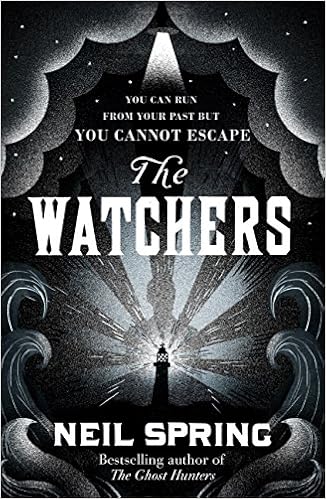
Book Review: 'The Watchers' by Neil Spring

Warning – while I have tried to avoid major plot details, it is impossible to discuss my thoughts on this book properly without some spoilers.

Cold war paranoia, a remote Welsh village, mysterious objects in the sky and potential military conspiracy. These were the ingredients which attracted me to The Watchers by Neil Spring as I looked around the Horror, Science Fiction and Fantasy section of Waterstone’s for the ‘genre’ book of my current reading challenge. I was also attracted by the fact that it did not appear to be part of one of the sprawling, multi-book sagas which are so common in Fantasy and Science Fiction. Not that there is anything wrong with long series, but they do not suit my current purpose of reading a wider range of different books.

The term genre is controversial; I could (and might) fill another blog post with my thoughts on the matter, but for this reading challenge, I am considering novels which are given their own section in bookshops to be ‘genre’ and everything in the general fiction section to be ‘non-genre’.

The Watchers tells the story of Robert Wilding, a parliamentary researcher who is sent on a secretive mission to investigate a series of UFO sightings in the Havens, the coastal Welsh village where he grew up. Along the way, he will re-unite with his grandfather – a religious fanatic – and uncover the details of his parents’ mysterious deaths many years before.

Spring makes good use of frame narratives to tell the story, hinting at wider ranging implications of the events on which the novel centres, and eventually setting the scene for a sequel (so much for my choice of a ‘stand-alone’ novel). Particularly interesting is Spring’s use of extracts from parliamentary reports, interviews with survivors and other in-world texts to allow us a range of perspectives and to build tension towards the novel’s climax. This is a much more successful technique than the ‘I thought it couldn’t get worse, but then it did’ style of foreshadowing which Spring somewhat overuses.

The Watchers hits all of the right beats for a thrilling super-natural mystery with a satisfying, action-movie set-piece at the end. It also incorporates a number of elements which I found to be potentially interesting. I like it when books have range of reference points and this one manages to take in noted occultist Aleister Crowley, the Egryn Lights, Ley lines and secret military experiments. The book’s title, The Watchers, refers to the angelic beings mentioned in the apocryphal books of Enoch, who are credited with the promethean act of imparting forbidden knowledge to mankind in the era before the flood. Unfortunately, this aspect of the Watchers is not really explored in the novel, and they become more generic fallen angels.

There is an irony in this, as the idea that knowledge should be shared freely rather than hidden away by those in power is introduced early in the novel: the protagonist’s mother is blinded during a protest about secret American nuclear weapons on British soil, and Robert Wilding is driven in part by his desire to find out the truth of these circumstance and to force the Americans to be more open about their actions in Britain. Wilding’s search for truth is set up in opposition to many of the other characters in the book, from the scared villagers, to the military, to his own grandfather, who are all withholding information from him. The Watchers mythos, which is sometimes associated with ancient alien conspiracy theories, would fit nicely with the story that Spring initially seems to be telling.

Perhaps one reason why Spring ignores the stories of the Watchers teaching mankind skills like writing, astrology, magic and blacksmithing, is that they are simply on the wrong side. While truth, and freedom of information appear at first to be among the books main themes, the power of Christian faith later becomes more prominent. This is an aspect of the book that worked less well for me. I do not know whether Spring is a Christian, or whether he merely found that Christian mythology allowed him the best framework for the story he wanted to tell, but I found this aspect of the book to be annoyingly preachy. One possible reading of the book would be that it tells the story of a character who has is unsuccessfully searching for truth and meaning in his life through secular institutions, but eventually finds it when he casts aside his scepticism and embraces the Christian faith which allows him to combat the power of evil. In this interpretation, it is also noteworthy that (spoiler alert) the local Catholic priest, who had allowed his doubts about Christianity to steer him towards Communist sympathies, ultimately finds that his weakened faith is not enough to protect him, and sacrifices himself in his attempts to save others. However, although I was not carried along by this aspect of the novel, I did find myself rooting for Wilding’s reconciliation with his grandfather, Randall Llewellyn Pritchard, whose apparent fanaticism is justified by the novel’s conclusion.

Despite my (non-militant) atheism, I do not, in theory, have a problem with religious art. The Exorcist (film, not book – which I haven’t read), for example is able to deal with the idea of evil in a clearly Christian context in a way which is both powerful and haunting. I do, however, think that making the ancient evil derive clearly and straightforwardly from Judeo-Christian tradition lessons its impact a little, in that it gives it makes it explainable. Once your eldritch abomination has a clearly definable origin story (complete with a kryptonite as simple as ‘believing really hard’) it ceases to be scary. I also wonder if one reason I did not get along with the novel’s Christian aspects was that I felt a little tricked into it – there were few clues set out for us to pick on, and it felt less like a plot twist, and more like a sudden realisation that I wasn’t reading the book I thought it was. This would, perhaps, have been forgivable if it weren’t for some other plot features which failed to convince. For example (Spoiler alert), the local ‘rotary club which doubles as an evil cult’ reminded me a little too much of the Simon Pegg and Nick Frost film Hot Fuzz for me to take it as seriously as The Watchers wants us to.


This is not to say that there is nothing to enjoy here. If you are looking for a straightforward supernatural thriller, and can stomach the evangelism, The Watchers provides a decent Dr Who style mystery combined with a high-stakes ending which, if it had taken place over New York, would not have seemed out of place at the climax of an Avengers movie. I enjoyed Spring’s innovative use of different texts, and he makes good use of classic Gothic tropes such as isolated villages, creepy hotels, ruined castles and pertinent warnings from seemingly crazy old men. I rarely found the novel to be genuinely unnerving – something I think is a key marker of success in a horror novel – but on a human level, Robert Wilding is a relatable and sympathetic narrator and many of the other characters are similarly well-drawn. Unfortunately, these successes did not, for me, outweigh the novel’s failures. I doubt I’ll be looking for the sequel.

Friday, 19 February 2016

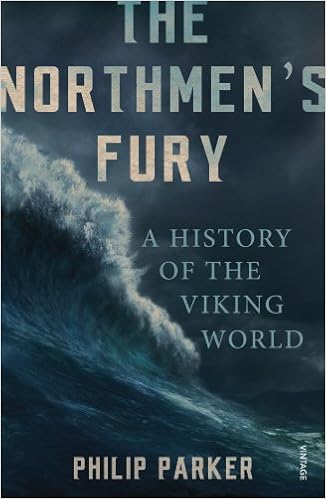
Book Review: The Northmen's Fury - A History of the Viking World by Philip Parker

This year I’m using the power of the twenty-sided die to force myself to read more widely. My first role showed a 12 for ‘History, Myth and Legend’, and so I headed into Waterstone's with my Christmas gift card and had a rummage. With everything that has ever happened (and a significant quantity of things that didn’t) to choose from, it was a difficult decision. In the end I let my current obsessions choose for me, and selected Philip Parker’s history of the Viking world ‘The Northmen’s Fury’.

For a while, when I was in primary school, Terry Deary’s Horrible Histories took up the most space on my bookshelf. Those books first introduced me to the joys of reading and of history, but while I still find the past fascinating, I’m a little ashamed to admit that until I embarked on this project, I had never read a history book aimed at adults. For somebody who has not fostered the skill of reading history, The Northmen’s Fury is perhaps a difficult place to start. This is no fault of Parker’s – he writes clearly and engagingly, but he does so about a contradictory people, and across a field which is both temporally and geographically huge.

One thing that history has in common with the novel is that both concern themselves with cause and effect, but when the primary sources are as sparse and biased as they are for the Vikings, motivations can be hard to follow. While the Vikings had a writing system in the form of runes, they left little record of themselves other than a few monumental inscriptions often following a simple ‘X raised this rock in memory of Y,’ formula. One or two of these appear to corroborate information from the much later sagas, but they do little to help Parker tell the ‘story’ of Norse culture. This largely non-literary, largely pagan culture spent a significant amount of time attacking Christian neighbours who did keep fairly detailed historical records. Add to this the fact that many of their victims were monks – the very people writing those records – and it is little surprise that contemporary sources created the, barbaric picture of the Vikings that remains in many people’s minds to this day. They were, of course, sometimes capable of brutal violence, but no more so than many of their neighbours. Parker tells us of the massacre of the Danes who had settled in England, as ordered by King Aethelred, during which even the children of ‘those women who had consented to intermix with the Danes’ were ‘dashed to pieces against posts and stones’.

When the Vikings’ descendants did develop their own rich literary heritage in the form of the Icelandic sagas, Parker is careful to remind us that they were written down many years after the events described (presumably as the culmination of an oral tradition), and that many of them serve to legitimise the claims of this or that Norwegian royal house. While he acknowledges the potential unreliability of his sources, Parker does not shy away from presenting much information from them as fact – a decision which can be justified by imagining the difficulty and tedium involved in reading a book which presents every single action as something that may or may not have happened.
The difficulty in following the chain of causality is not always helped by the fact that the Vikings tended to travel widely, and Parker’s decision to divide up many of his chapters geographically (although some areas get different chapters for different periods), means that we sometimes have the same historical figure appear in different chapters without necessarily following their careers in chronological order. It should be noted however that Parkers systematic approach is useful in giving a sense of organisation to this history’s vast scope. Those readers who would like an approach which more closely examines the biographies of the period’s key players will find themselves well served by the book’s penultimate chapter: a set piece centred on the dual invasions of England in 1066 which follows lives of each of the three key players up to that point. Parker is seemingly helped here by the more detailed sources available for this period, and manages to shed new light on a period I thought I knew well. The life of Harald Hardrada is particularly interesting: he spent a number of years fighting in the Byzantine empire’s Varangian guard before taking his throne in Norway, and seemed to be the most experienced of the three generals vying for the crown of England.

I do not wish to suggest that Parker himself is responsible for the sometimes confusing nature of the book. He does a very good job of providing readers with a structured history of a people whose motivations are lost to time, and who sometimes do things which seem bizarre to the modern reader. For example, several of the kings of Viking Dublin seem to have abandoned their thrones to take up kingship of York, or vice versa, and at least one later changed his mind, returning to Dublin to oust the relative who had ruled in his place. Adding to the confusion is the fact that it sometimes seems as though almost all of the era’s major figures are called Harald or Olaf, and thus they almost all bear the patronym Olafson or Haraldson.

When I studied A-level Archaeology, the parts I found most interesting were the small glimpses we occasionally get into the lives of people from long ago. It is in these moments that this book is also at its best. For example, the small group of Norse Christians returning from the crusades who took shelter in the Neolithic tomb at Maeshowe on the Orkney islands, and occupied their time in carving coded runes into the walls with messages varying from boasts about the skill of the carver, to praise for Ingigerd, ‘the most beautiful of women’, and even a claim that a large pile of treasure that was removed from the tomb and buried somewhere nearby (probably an example of Viking humour – as Parker points out, the sparse, primitive grave goods we find in stone-age tombs are unlikely to have been of much interest to Norse warriors). While the style here is still very much that of a fiction book, we as readers are in the tomb with the band of crusaders while the storm rages outside.

As might be expected from a history of the Vikings (and probably of any early medieval group) the story we are told predominantly concerns the military elite, with the lives of the everyday folk fading into the background. This is understandable, as the farmers who likely made up the majority of the population had little opportunity to do much that would be worthy of record in sagas or in monks’ records. We do get more of an idea of the lives of ordinary people when Parker turns his gaze across the Atlantic to focus on the settlements of Iceland and Greenland, and the probable forays into parts of North America (interestingly, the Greenland colony, which almost certainly collected resources from the American mainland, made its last written records in 1408, and archaeological evidence suggests that the colony may have survived until the latter half of that century – only decades before Columbus’s discovery of America). In these chapters we are presented with a people who resisted any form of leadership which is too autocratic – both Iceland and the Isle of Mann have claims to the oldest running parliaments in the world – but whose isolation and infighting eventually caused them to submit to Scandinavian monarchies which would later neglect them in times of need.

As well as valuing independence, the Viking people are presented as being great technological innovators whose long-boats allowed them to strike deep inland along river courses, and whose navigational skills allowed them to build up a trading network which stretched as far as Constantinople and the Middle East. Their cultural sphere of influence stretched from Kiev and Novgorod in the east, to the shores of America in the west, but their lack of one unifying government – and their sometimes Game-of-Thrones-esque political infighting – prevents them from being considered as an empire on the scale of the Romans or the Macedonians.  

In the final chapters, Parker deals with the descendants of a small group of Vikings who settled in the  France, and went on to found dynasties across western Europe. He also discusses the 19th Century cultural interest in the Viking myth and acknowledges how parts of it were appropriated by the Third Reich (although he does not mention the ongoing rift between Neo-nazi and non-racist factions in contemporary Germanic Neopaganism), a system of government which would almost certainly have appalled those Vikings who braved the unforgiving North Atlantic in order to avoid what they saw as increasing tyranny in Scandinavia and set up communities which we would now recognise as being run along democratic lines. In this respect it’s also worth noting that the Viking societies seemed happy to trade and intermarry with people of many different cultures and religions, and in areas like Normandy and Russia they eventually became fully integrated with the surrounding people.

This is connected to one of the core things I was reminded of by this book. History is always more complex than we imagine it. In popular culture, Vikings are very much the pagan outsiders ransacking Christian Europe, and while there is an element of truth in this, it is worth remembering that they were also shrewd traders, whose politics were deeply interwoven with their neighbours, particularly in the British Isles. I was also surprised to learn that, while it took a long time for Christianity to become established in the Nordic countries (and Norway had a pagan rebellion as late as the 12th Century), there is evidence that there were Christians in Scandinavia at the very start of the Viking period, and Christians were involved in the settlements of both Iceland and Greenland. This should not be a shock, given the Viking age starts five centuries after the Roman Empire had made Christianity a dominant faction in Europe. One thing about the pop-culture Viking which does seem to be true is their preoccupation with being remembered in stories, and I’m sure the many Haralds and Olafs mentioned here would be pleased to see their names recorded a millennia after they passed into the afterlives of their chosing.

Next time I read a history books, I might opt for something with a narrower focus, but I very much enjoyed this overview of a period I have long been interested in. My next roll of the dice was an eleven, for a genre novel. I opted for The Watchers by Neil Spring. Watch this space for a review.

Sunday, 10 January 2016

The D20 Reading Challenge, or 'How I plan to read more widely in 2016'.

I love bookshops, but they also stir a feeling in me which (to my knowledge) there is no word for: a sadness that however many books I read, there will always be good ones which I miss. I’m not much given to biblical quotation, but I’m inclined to agree with Solomon’s observation that ‘of the making of many books there is no end’, and there doesn’t seem to have been any let up in the intervening 3 millennia. And if I’m determined to add to their number, I know that I should be reading as widely as possible.

This is where the problem lies. The modern bookshop presents such tyranny of choice that it’s too easy to give up and stick to familiar names (meaning that you never discover anything new – less established authors are deprived of new readers and you end up with a narrow experience of the literary world). Worse, sometimes I am so overwhelmed that I give up, and leave empty handed.

With this in mind, I decided it was time for a solution – something to push me out of my comfortable reading nook. Turning to the twenty sided die, that universal symbol of geekdom, I devised the D20 reading challenge. It’s simple, just roll the dice and pick a book in that category. Roll, Read, Review and Repeat. The categories are not mutually exclusive, but nor are they meant to be. My version is below, but if you want to try it, feel free to substitute any of the categories with ones better suit you.

1. The canonical novel.
Probably not a controversial choice this, but despite my three years (*embarrassed cough*) of literature A-level, three year English degree, and my current role as an English teacher, feel that I’ve still only scratched the surface of the great corpus of English novels. More controversial is the concept of the canon itself. Not wishing to fall into that debate, for my purposed the canon is defined simply as ‘the novels any serious reader is ‘supposed to’ have read’.

2. 21st Century novel
In pursuing the classics, it is easy to neglect the many novels that are being published here and now. Serious reader (particularly those who want to be writers) should be aware of what is going on around them. ‘Nuff said.

3. A novel which is an old favourite
One of the great pleasures of reading is in re-reading. It is always interesting to return to a favourite book after a number of years to see how your attitude to it has changed. As you reach new stages in your life, different aspects of the novel can seem more important – you may find that you interpret the ideas in the novel differently, or find yourself relating more to characters who didn’t interest you in the past. In the clamour for new and exciting reading experiences, it is important not to forget where you have come from. However, I would have been disappointed if this had come up first.

4. A new novel by a familiar author
‘New’ here meaning ‘one I haven’t read before’. Like anybody, I have my favourites, but there are not many writers who have more than one or two books on my bookshelf. This is a chance to further explore those authors who are under-represented, or to expand my collection of those writers I like the most.

5. A small press, local, or self-published novel
Because I know enough writers and publishers that deserve support, particularly in the Birmingham area. And because easy self-publishing is probably one of the most important developments in modern literature – it would be silly to ignore it.

6. Poetry – A new book by a familiar poet
My reasoning here is, unsurprisingly, similar to number four. This seems like a good place to mention that I am more interested in individual collections rather than anthologies or ‘selected works’ – a stance which probably goes back to being introduced to bands like Pink Floyd at a young age. Poetry collections, like albums, should be seen as one coherent unit.

7. A small press, local, or self-published poetry collection
This is perhaps more important here than it is with novels; independent publisher are the life-blood of poetry, seeming to make up the vast bulk of poetry publishing in the UK.

8. A poetry collection which is an old favourite.
All the things I said about ‘old favourite’ novels apply doubly here. The complexity of how language is used in poetry make changing interpretations even more likely, and its roots in the oral tradition mean poetry is designed to be repeated.

9. Poetry in translation
I used to avoid translated literature out of an immature snobbishness about it not being in its ‘original form’. I only read in English though, so if I kept up this attitude I would be missing out on entire cultures worth of literature. The issues surrounding the translation of poetry are interesting, and it could be argued that translated poems are more like new works which are intrinsically connected to their sources.

10. Poetry by ‘important’ poets
The idea here is similar to the ‘canonical novel’, but I have substituted ‘canon’ with ‘big name’ as many of the poets I am interested in for this category worked in the 20th and 21st centuries. This is the category for bigger publishers and the more famous poets, alive or dead.

11. A ‘genre’ novel
My relationship with genre novels could probably make up a blog post in their own right. For a long time they were all I read, and then there was a (thankfully brief) period of snobbishness around the beginning of my degree. Later, I came to my senses and realised that good writing is good writing whatever it is about, and that science fiction or fantasy writers take their craft as seriously as ‘lit. fic.’ writers. I still don’t read many genre novels though, purely because there are so many books of all different types that I want to read (which is one of the reasons I’m making this list). Genre in the sense that I am using it includes fantasy, science fiction, horror and crime. I accept the argument that ‘literary fiction’ is really another genre, but as that makes up most of my reading, I feel I should include a category to move me into other areas.

12. Non-fiction – History, legend and myth
As great as fiction and poetry are, I feel that it is important to also be well read and well informed about the real world. This is where my reading habits really let me down. Faced by so many exciting novels, I rarely browse in non-fiction for long. This is strange, because I do love learning interesting things, and I’ve always been interested in history in particular. The ‘legend and myth’ part of this category is designed to allow for older texts which include things which people once believed to be true and are there for written as non-fiction (for example, Snorri Sturluson’s Prose Edda, which was written after Iceland had already been Christianised, but which was intended to keep record of the older beliefs which had shaped that nation’s culture). It should be noted that in all of the non-fiction categories, I’ll be looking primarily at books which are ‘writerly’ as well as informative.

13. Non-fiction – Memoir and travel writing
Around the same time that I had snobbishness about genre fiction, I also misguidedly thought that non-fiction is not really literature. This category is dedicated to Ian Marchant, whose ‘life writing’ module in the second year of my degree taught me that I was wrong.

14. Non-fiction – Philosophy, science and the social sciences
If the ‘history’ category is designed to keep me well informed on what has happened, this one is designed to keep me thinking about how things work, or at least how we think they do. That’s the logic behind putting philosophy and science together. Again though, I’ll be looking for books which are writerly as well as informative, so expect more pop-science and less text books.

15. A graphic novel
This is a means of storytelling which I have long thought of as interesting art form in its own right, with a format which is similar to prose, but has an entirely different set of tools to use. However, as there are so many books I want to read, it’s a format which I am still yet to really discover for myself.

16. A short-story collection
I love short stories. I love the brevity and the craft of them. Unfortunately for them, I love novels a little more, so this is an area of my bookshelf that has been a little neglected.

17. A novel in translation
Language and culture are intertwined, and as with poetry, I’m currently missing out on some of the best prose that other cultures have to offer. This category is designed to remedy that.

18. A book I never finished
I’m a fairly diligent reader, so there aren’t too many of these. But there some hangovers from university (The Monk and Waverley, for example) to polish off, and there are also books that have suffered from my habit of having two or three books on the go at once and my tendency to get distracted. It’s time to give them the attention they deserve.

19. Literary criticism, language and writing
These are the ‘how stuff works’ books that I would gravitate towards most naturally. I’ve given them their own category to push me into wider and more far-ranging topics for category fourteen. Their inclusion also reflects the importance of staying up-to-date and well informed in one’s own field.

20. Wild Card
I love the idea behind this category, and it could become the basis of a future reading challenge all on its own. The idea is that when I roll a twenty I will ask somebody whose opinion I trust (a friend or family member, a co-worker, a bookseller) what they think my next book should be, and read that.

Additional Information
I’m calling this a reading challenge because this year I intend to select all of my books like this (with the exception of books I need to read for work or books that I want to read as research for my own writing projects). To ensure breadth of coverage, the first time round I will eliminate categories as they have been selected, meaning that I will cover every category at some point this year. After that all the categories will be restored and repetitions will be allowed. The challenge will last for this year, or until I’ve covered every category. After that it will just be a way of selecting new books if I don’t have a specific one in mind. I haven’t included any drama categories because plays should be seen rather than read.

I’ve started already, throwing a 12 and selecting The Northmen’s Fury: A History of the Viking World by Philip Parker as my first book. If you’d like to join me, with my categories or with your own, leave a comment below. If you don’t own a twenty sided dice (doesn’t everybody?) you can use this website to generate your rolls.

Sunday, 19 July 2015

Book Review: 'The Wake' by Paul Kingsnorth

Hastings, 1066. For many of us this is where English history begins. Before this, we are taught, a few barbarian warlords wrestled the land away from the equally barbaric Celts in the power-vacuum left by the Romans, then squabbled over it for the next 500 years or so until William the Conqueror and his knights chased away the dark ages, restoring civilization, establishing Chivalry, and setting England on her path to the glorious empire of the 19th Century.

The cliché tells us that history is written by the winners, and this particular propaganda has been persistent. It is pretty much the story I learned in primary school, and seems to have echoes in the ‘Our Island Story’ curriculum Gove was pushing a couple of years ago. This book, though, is concerned with the losers. For Buccmaster of Holland, 1066 marks the death blow for England, but it is not a clean wound. The Wake follows Buccmaster into the forests of Lincolnshire, where he becomes a ‘green man’, fighting a guerrilla war against the French invaders.

One of the challenges of historical fiction, even if it deals with primarily fictional characters, is how to engage readers in a story with a foregone conclusion. Kingsnorth approaches this by focussing on Buccmaster’s personal journey against the backdrop of a hostile foreign occupation. When telling a tale like this, there is a temptation to write about a heroic underdog, leading his noble but ultimately tragic people in a final stand against tyranny, but here the big historical players, William, Harold, and even Hereward the Wake, whose epithet gives the novel its name, exist only as distant rumours[i]. The Norman invaders are inarguably oppressive, but the inequalities in English society are accepted as natural by the characters, and Buccmaster does not see the irony in his adoration of the Anglo-saxon raiders who had crushed the existing Romano-British culture in the same way he fears the Normans will destroy the English way of life.

Buccmaster himself is decidedly unheroic. He is petty, arrogant, probably delusional and ultimately pathetic, but it is through his voice that the story is told. While he is sometimes a difficult character to like, it seems right that we should see these events from the point of view of somebody who is ordinary and flawed; most of us will only ever play bit-parts in the grand narrative of human history, and in Buccmaster, Kingsnorth gives us protagonist who struggles to see this, both as an individual, and as a representative of a culture in terminal decline.

One of the novel’s great successes is the way that it brings Buccmaster’s voice and his world vividly to life. This is achieved through Kingsnorth’s great experiment: in recognition of the fact that ‘our assumptions, our politics, our worldview, our attitudes’ are reflected in the language we speak, the novel is written in a ‘ghost tongue’ – an approximation of Old English designed to be accessible to modern readers. What could easily have become a gimmick is in fact one of the strongest aspects of the novel, and while the language takes a little perseverance at first (and perhaps more so if you aren’t already involved in word-geekery), it soon becomes natural. Other than a few of the more unusual words (most of which are covered by a glossary), I found that within a few pages, I was able to read and comprehend the language as it is, rather than needing to mentally translate. In fact, Kingsnorth’s ‘ghost tongue’ lives up to its name, as I found its vocabulary sticking with me after I had put the book down. In attempting to write in a language which has not been moulded by a thousand years of loan-words, and political, economic and philosophical change, Kingsnorth gives his narrator a speech which is rooted in agriculture, the natural world, and a pre-feudal view on human society, avoiding the trap of giving his 11th Century characters 21st Century minds. This ghost-tongue also has a lyrical beauty of its own: ‘it is early in the mergen mist is risan from the waters and on top of the waters is mos grene lic the grenest daeg and deop below deop in the blaec water can be seen great leafs what is suncan almost from sight. all is flat all this land is flat naht stands abuf the reods. low we is and we gan slow through the green and naht is to be seen but the water…’

This 11th Century mind-set does not mean that the novel has no relevance today. Kingsnorth has written non-fiction about the loss of English cultural identity, and it is interesting to read the novel in a society where this is increasingly dominated by nationalists. The book offers no answers, but it did make me wonder if the paranoia about immigrants eroding the English way of life might stem from deep cultural memories. Whether you start English history at 1066 or in the 5th Century with the first Germanic settlers, the national origin story is one of conquest and displacement. I do not wish to draw comparisons between the Norman conquest and the migration patterns of the last century – a top-down, military subjugation of the native population is clearly entirely different from a steady influx of families and individuals looking for greater economic or social stability – but I suspect these deep-seated invasion narratives from our early history have coloured some aspects of the debate on migration.

For the English of The Wake, there can be no period of gradual adjustment. When William the Bastard seizes the thrown, it marks a catastrophic end to the Anglo-Saxon way of life. The language may be unfamiliar, the protagonist unsympathetic at times, but this book offers an intimate exploration of the way people might react to such a complete destruction of their way of life while offering some insight to an often overlooked period of English history from the perspective of those who are not destined to be remembered.


[i] It is interesting, as a modern reader, to experience a society where news cannot travel faster than a man can walk. The world seems bigger – more isolated. Important events are one step removed from the characters’ lives.

Tuesday, 5 August 2014

Five Books That Made Me.

When I first started this blog, I chose the name ‘Under the Influence’ as a way to acknowledge that as a writer, I have inevitably been affected by everything I have read. In fact though, it goes deeper than that – books have actually been some of the building blocks of my identity. A few months ago, there was a brief fad on Facebook for people listing the books which had had the biggest impact on their lives. I didn’t bother with it at the time because I felt a list without any explanation would not really be interesting. I’m hoping these will spark some sort of discussion - chip in with your own thoughts in the comments below. It would be good to know what books other people have found formative. Keep in mind that these are the books which have had the biggest influence on me, not necessarily my favourite books, or the best books I have ever read (although there is of course some cross-over).

Roughly in the order I came across them:

The Bible – various authors.
Nothing like starting with a controversy. Those of you who know me, know that I am not religious; those of you who know me best know that this has not always been the case. I was raised (on one side, at least) as a Jehovah’s Witness, meaning that the Bible actually played a pretty big part in my life growing up. I categorically do not think that religion is the only reason that humans have developed a sense of morality, and I believe that moral systems based on the Bible have a long history of being flawed, but it would be intellectually dishonest to pretend that it didn’t play a part in my own development: principles like ‘treat others as you would like to be treated’ are probably fairly universal in human culture, but this was where I heard it first.

Perhaps more importantly, stepping out from under its shadow when I was on the threshold of adulthood gave me the chance to reassess my understanding of the way the world worked, and revaluate my moral code. What it left behind was an interest in the stories we tell ourselves to explain who we are – I still find the Bible fascinating as a cultural artefact.

The Slimy Stuarts – Terry Deary
This is the only book on the list that I have never owned. Let me tell you a story: I am eight years old. It is the school holidays, and my mother has taken my brother and me to the local library. I am not enthused – I have somehow picked up the notion that reading is boring. This is the only time I ever remember thinking this. I can only assume I picked the idea up at school. Luckily, my mom talked me into borrowing The Slimy Stuarts. Deary has a knack for fishing out the bits of history most likely to appeal to young boys. I was hooked on books again, and had a newly discovered passion for history. I’ve never looked back.

The Hitchhiker's Guide to the Galaxy – Douglas Adams
I think I arrived at this book at just the right time. At fourteen, my reading diet consisted largely of Star Wars tie-in novels, and I was primed for something that would take my sci-fi fandom in a different direction. The ‘lived-in’ state of my copy is probably evidence of how much I enjoyed this book, but to justify its inclusion on this list, it also needs to have changed me in some way. My sense of humour seems like the obvious place to look. Adams was not afraid to follow a digression to see where it went, and he managed a careful blend of old fashioned silliness with astute observations on human nature which has almost definitely influenced what I find funny (although arguably I must have been in the same ballpark to ‘get it’ in the first place), but I think this book probably affected me in other ways too. I related to Arthur Dent, although in many ways he is an unusual protagonist – he doesn't want some big thing that will conclude his plot-arc – he wants a quiet life and a nice cup of tea. More importantly, the big events he stumbles into aren't part of some over-arching scheme. Coincidences are rife, as are random events. Things happen because people are trying to get by, and this has unpredictable consequences in other places. When they do try to answer the big questions of what the universe is about, the conclusions are always unsatisfying or mundane. This is how I suspect it is in the real world – there are no ‘big answers’, we just have to do the best we can in the circumstances we have.

Crow – Ted Hughes
This was the first poetry collection I ever bought, and I include it here knowing that in some circles, wading in on this side of the Plath/Hughes divide will be as controversial as my ideas about the Bible will be in others. Crow was very hugely influential for me as I began to figure out the sort of writer I wanted to be. Firstly, although the poems have no connecting narrative, they are all centred around one figure, and are packed full of repeated ideas and images. My musical tastes had already prepared me to look for this sort of consistency in the CDs I bought, and it is the album, not the song, which forms my base unit of consumption for music. This book taught me to look for the same thing in poetry, and gave me something to aim for in my own writing. The collection also has a mythic quality which (perhaps as a result of early exposure to the Old Testament) I have often tried to imitate.

Howards End – E.M. Forster
If the Bible started my moral education, this is the book that helped me to develop it into adulthood as I dealt with the implications of no longer believing in a god who could provide some external measure of right and wrong. It also gets to the heart of some of the big ideological questions which still affect our politics today, without ever being too overtly political. Forster tells the story of the relationship between two families – the culturally aware and socially progressive Schlegels and the more practical, traditional Wilcoxes. If this all sounds heavily allegorical, it doesn’t feel that way in reading, and I think there are two reasons for this. Firstly, the main protagonist is herself grappling with how to reconcile these two positions – giving the novel a means to explore the issue without needing to resort to allegory. Secondly, it does not offer an easy solution; neither side is presented as being entirely wrong or right, rather the author suggest the importance of finding a balance and of making connections on a human level. I read this book as part of my A-level course, and it forms part of the foundation of my political and moral identity.


Incidentally, in researching this blog post, I found out that Zadie Smith wrote a sort of updated homage to Howards End. I might have to have a look…